


A playroom does not have to look like a toy store to offer children plenty of ways to play. A few familiar things on a low shelf, a basket of building pieces and a clear patch of floor can make the next activity easier to find. Toy rotation is simply a way of deciding which toys are available now and which are stored for another day.
The goal is not to make childhood look perfectly organized. It is to make play, tidying and finding missing pieces a little easier for the whole household.
Start with one shelf, not the whole house#
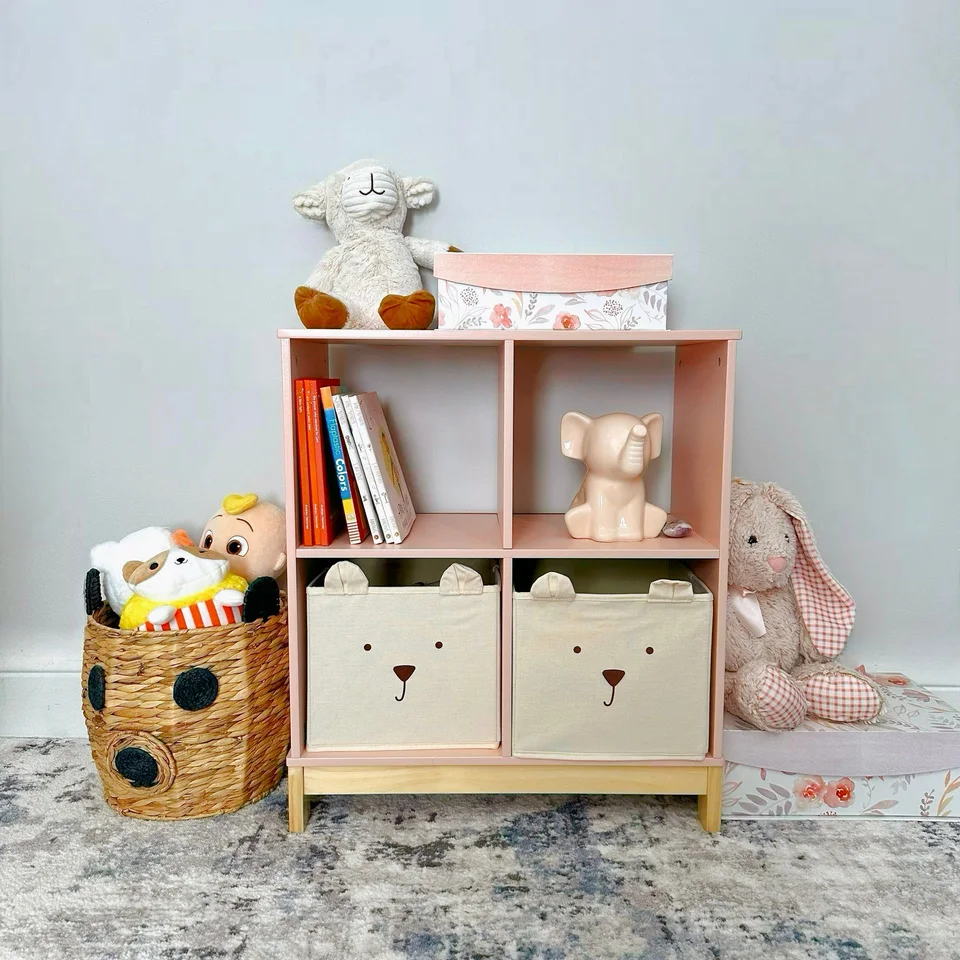
Choose a small, accessible area for the toys in everyday use. It might be a low shelf in the living room, two baskets beside a play mat or a single cupboard in a shared bedroom. Keep the space you already have and measure it before buying organizers.
Gather toys by activity: building, pretend play, puzzles, art supplies and books. Separate broken toys, missing-piece sets and toys that no longer suit your child’s age. Check for recalls and follow age and supervision guidance; put small parts and other unsuitable items beyond the reach of younger children.
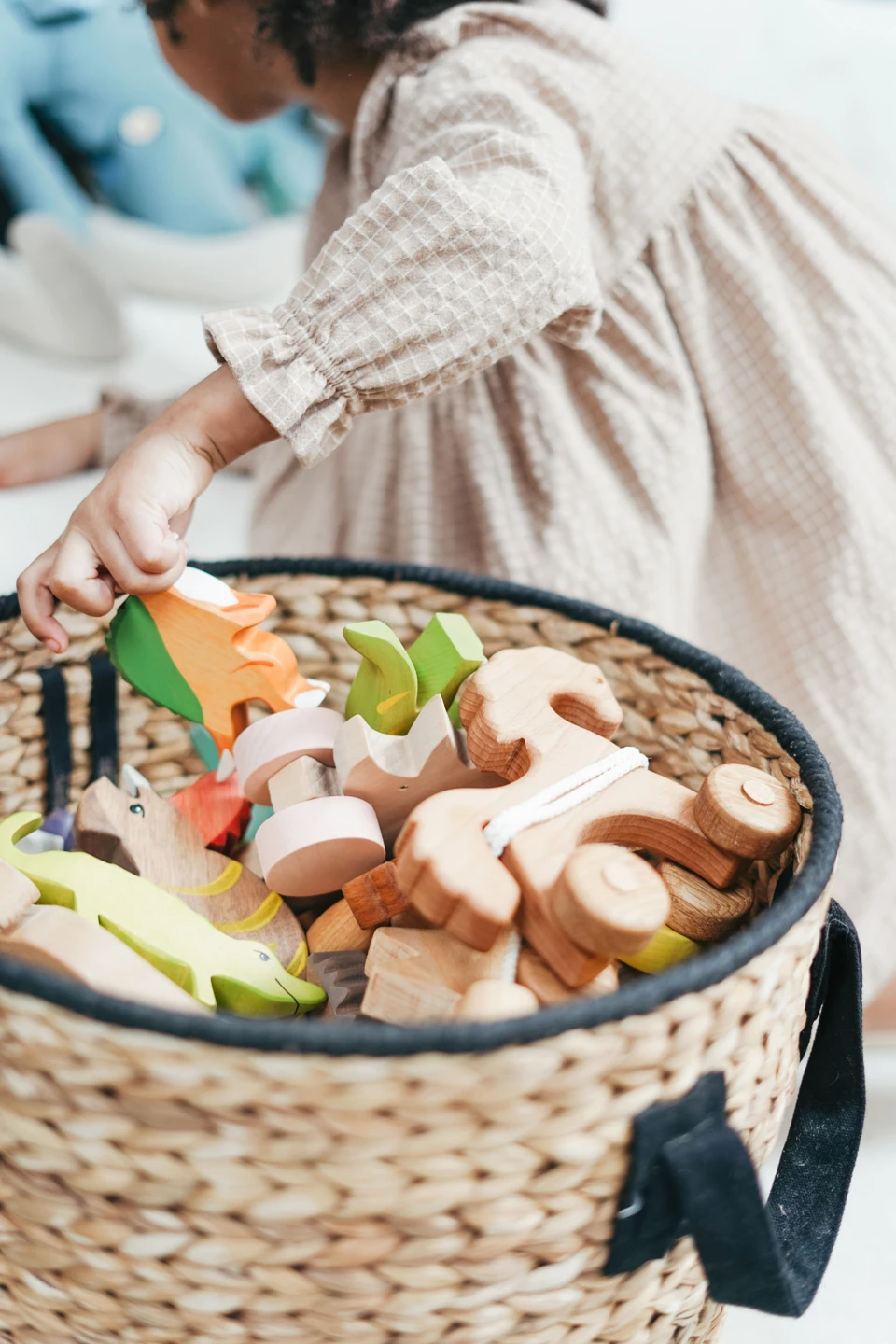
Choose a few varied activities rather than a fixed number of toys. Leave room for a child to take a basket out and put it back without needing to move three other baskets.
Make three groups#
| Group | What goes here | Where it lives |
|---|---|---|
| Everyday favorites | Comfort objects, frequently used books, ongoing projects | Accessible shelf |
| Rotation toys | Complete sets that can be exchanged | Labeled adult-managed storage |
| Review pile | Broken, outgrown or rarely used items | Separate area for repair, donation or disposal |
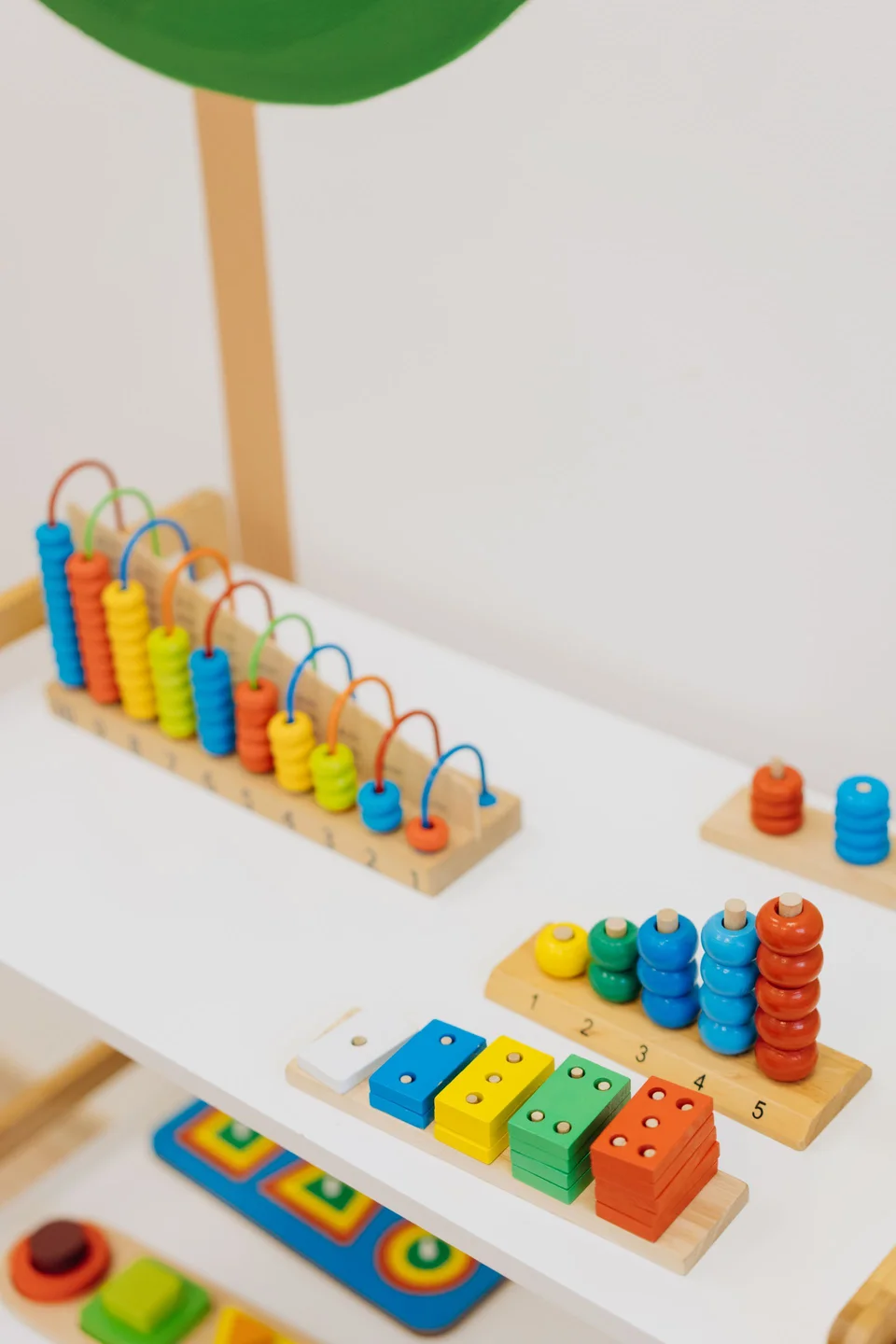
Keep everyday favorites available. If a child is building a city from blocks or returning to the same storybook every evening, there is no need to interrupt that activity just because the calendar says it is time for a change.
Build a flexible rotation schedule#
Begin with a weekly or fortnightly review, then adjust it to your family. A rotation can mean changing a single basket, not emptying every shelf. On a Sunday evening you might return the puzzles that have been untouched and bring out a train set. Keep the blocks if they are still part of a favorite game.
An example four-week plan:
| Week | Keep | Exchange one activity |
|---|---|---|
| 1 | Blocks and favorite books | Animal figures |
| 2 | Blocks and favorite books | Matching puzzle |
| 3 | Favorite books and ongoing build | Pretend kitchen set |
| 4 | Popular toys from earlier weeks | Age-appropriate art activity |
This is a sample schedule, not a developmental prescription. Let children help choose what comes back, and do not treat rotation as a punishment for a messy room.
Adapt the schedule to the child, not just the calendar#
| Stage | Example activity to keep | When to review |
|---|---|---|
| Infant, with an adult | Age-appropriate soft book or simple toy during supervised awake play | When interest or abilities change |
| Toddler | Familiar age-appropriate construction or pretend-play activity | A short weekly check, not a compulsory swap |
| Preschooler | An ongoing project, favorite books or games | When the project ends or the child requests a change |
| School-age child | A self-selected collection and current hobby | Agree on a review together |
These are household examples, not developmental targets. Keep infant sleep spaces free of toys and other loose items; play and sleep storage are separate decisions. Follow age labeling and supervision instructions, especially in mixed-age rooms.
Store the inactive collection somewhere practical#
A high adult-access cupboard, labeled closet bins or an existing storage cabinet can keep rotation sets together. Use containers that are easy for an adult to lift, and put heavier items lower down in secure storage. A simple paper list inside the cupboard is enough to remind you what is available.
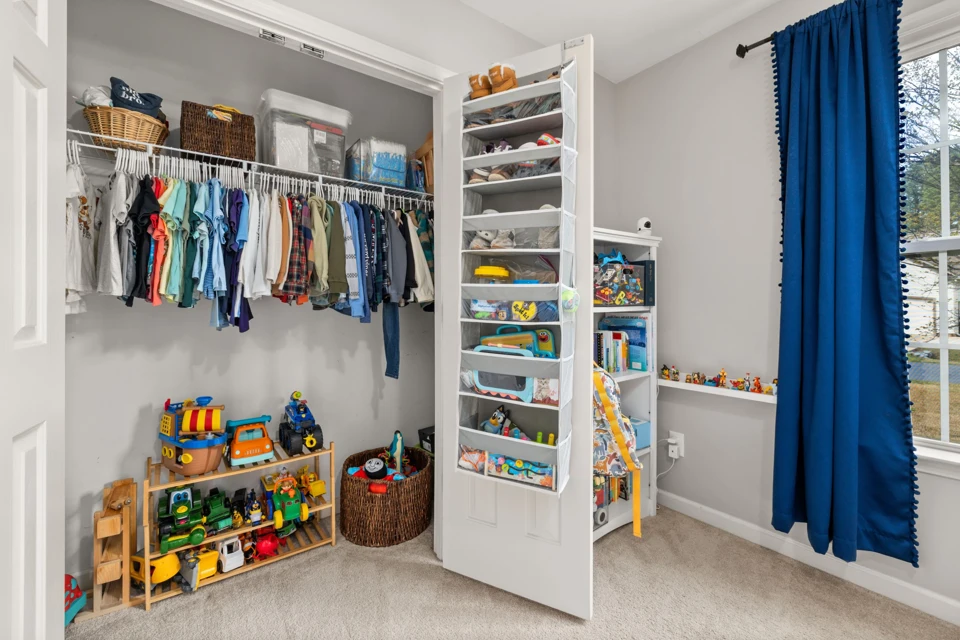
Avoid old trunks or chests that a child could climb into and become trapped inside. The US Consumer Product Safety Commission has warned about suffocation and lid-related hazards in storage and toy chests. Favor accessible open bins for everyday play; follow furniture anchoring instructions and keep cords, batteries and small pieces out of reach when appropriate.
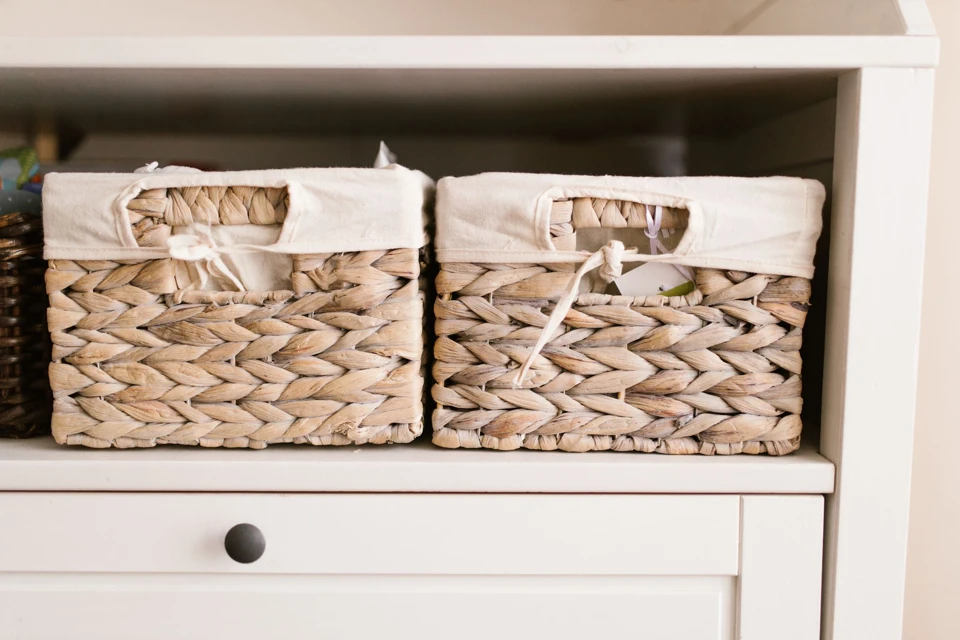
Organize for siblings without doubling the clutter#
For children of different ages, create separate storage for toys that require supervision or are unsafe for a younger sibling. A shared shelf can hold mutually age-appropriate toys, while an adult controls access to the rest. Never assume that placing small pieces in a lidded basket makes them inaccessible.
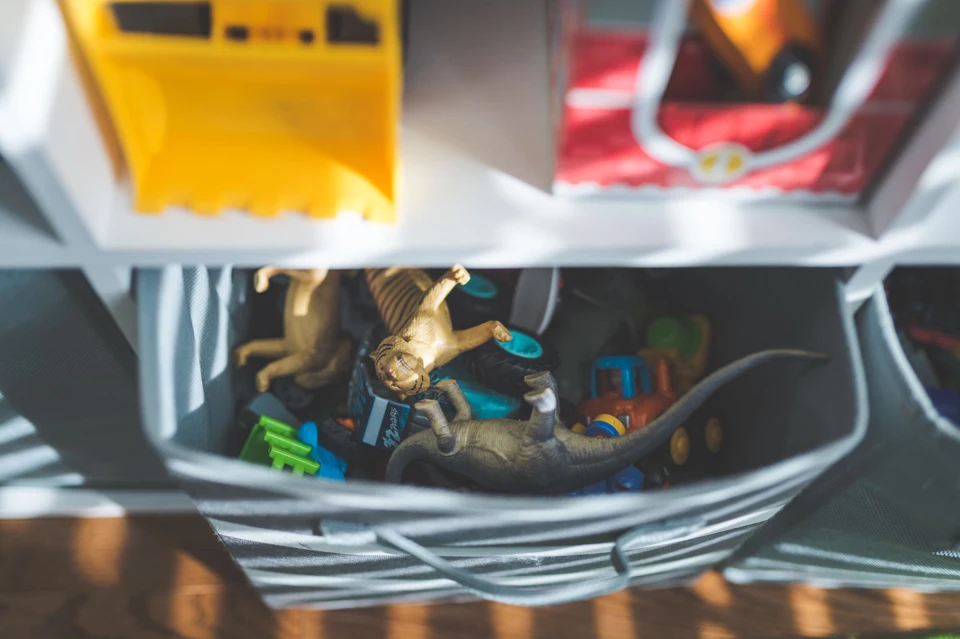
For two children who both use the same toy collection, offer a shared selection and keep a small personal space for each child’s special projects and favorites. That avoids an unnecessary system of identical baskets.
Make tidying part of the design#
Picture labels can help children identify which bin holds the cars or blocks, even before they read. Use a photograph or simple drawing of the contents rather than relying on matching colors. Leave empty space around the containers so returning a toy is as simple as taking it out.
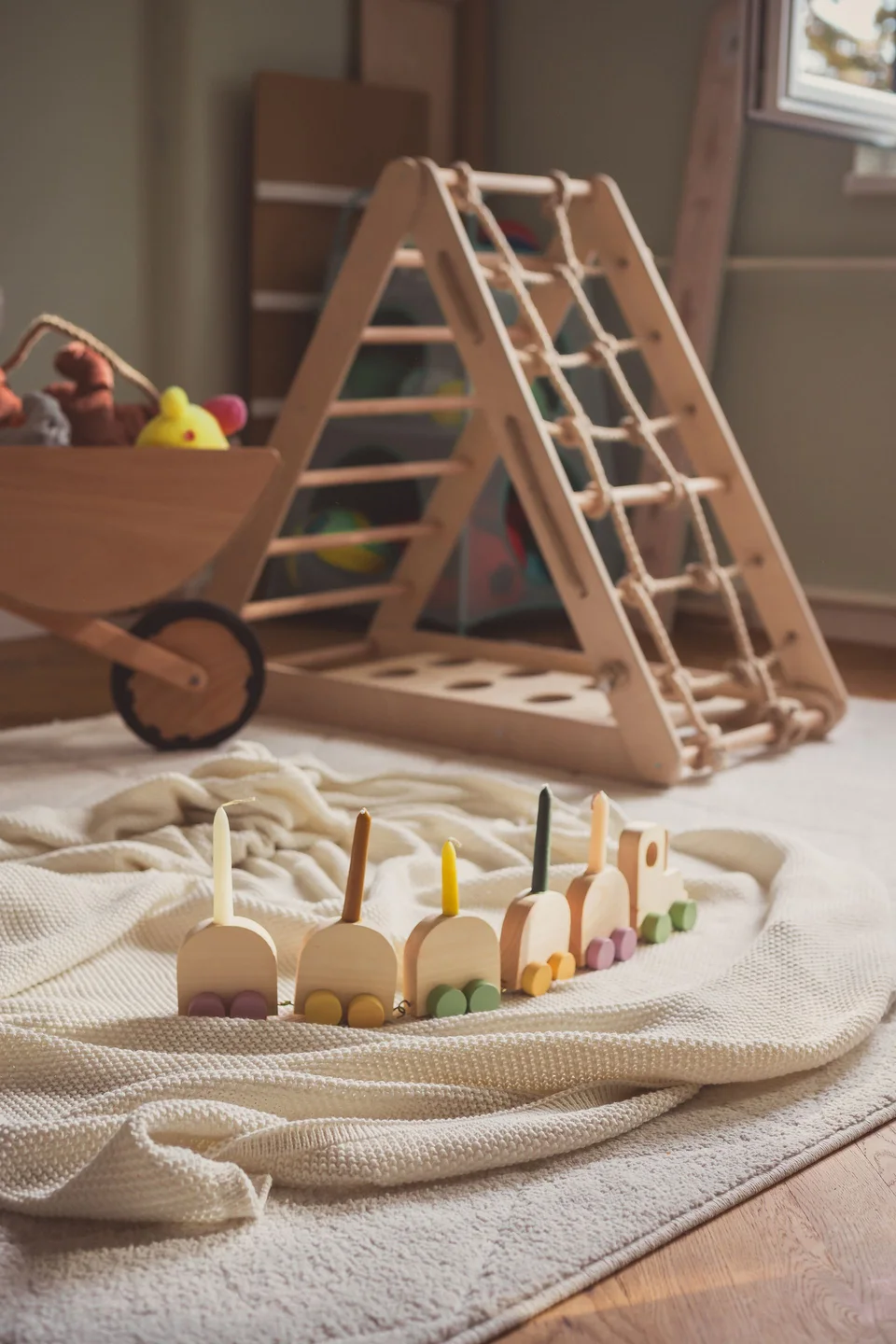
At the end of a play session, decide together whether a project needs to remain assembled. A tray or defined shelf for unfinished work lets the rest of the room be tidied without dismantling something important.
A five-minute rotation checklist#
- Check the current sets for damage, missing pieces and recalls.
- Keep toys that are still being used and any unfinished project.
- Choose one complete, age-appropriate replacement activity.
- Return the inactive set to its labeled adult-managed storage.
- Check that storage is stable, access routes are clear and hazardous items are inaccessible.
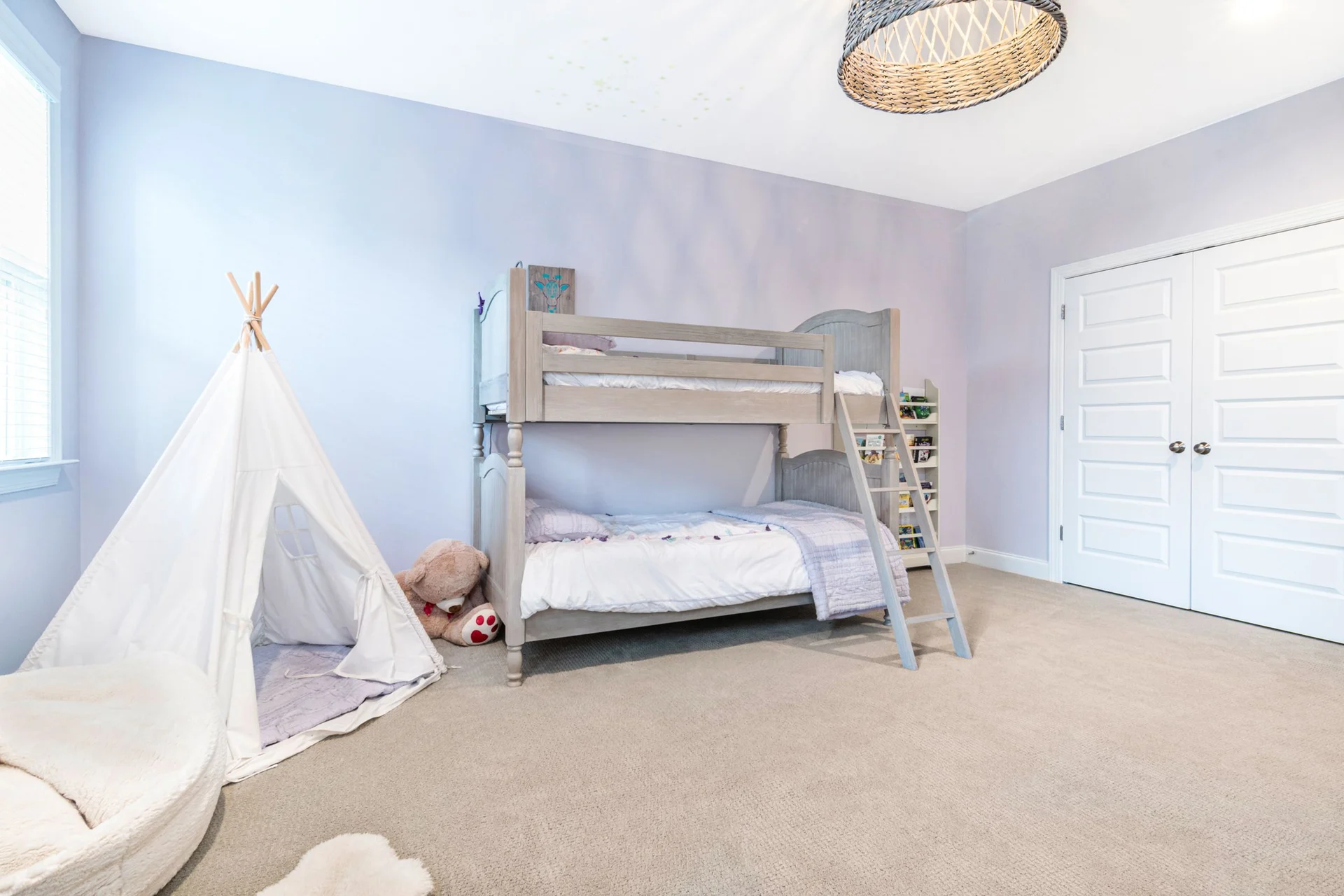
For a small apartment, try one everyday basket and one reserve container rather than a separate cabinet. The reserve container can sit in an adult-managed closet. There is no need to purchase matching bins or hide every toy.
What to do when the system stops working#
If the same toys sit unused for several rotations, ask whether the activity is too difficult, incomplete or simply no longer interesting. If everything is continually emptied onto the floor, try fewer containers or shallower bins where the contents are easier to see. If you forget to rotate, abandon the strict schedule and make changes when you notice a need.
A rotation system should be easier than the problem it solves. Start with one small shelf and adjust after a couple of weeks rather than buying an entire collection of storage furniture. My kids’ room ideas can help you think about the rest of the room, from textiles to the places where everyday family life happens.